Most growers know that plants need a range of nutrients to thrive — nitrogen, phosphorus, potassium, calcium, magnesium, micronutrients and more. But what’s less obvious is how each nutrient affects the availability and function of the others.
Nutrients do not exist in isolation. When you feed one, you’re influencing many. Some nutrients enhance uptake, others suppress it, and in some cases, supplying too much of one can create a deficiency in another — even if it’s technically present in the soil.
This is where Mulder’s Chart becomes an incredibly valuable tool.
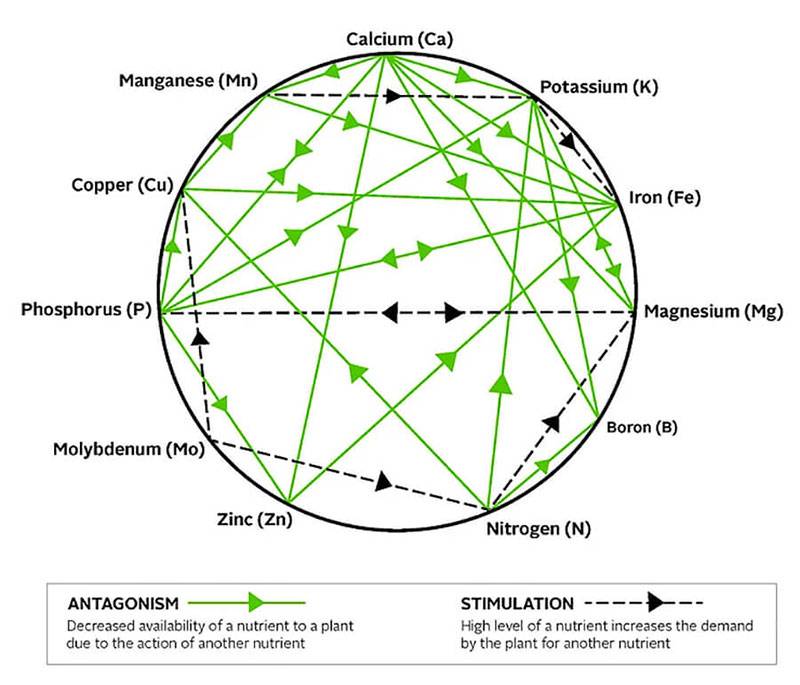
Mulder’s Chart visually maps out how each essential nutrient interacts with the others — showing which combinations stimulate or inhibit uptake. Understanding these interactions helps growers diagnose nutrient-related problems more accurately, and more importantly, prevent them before they occur.
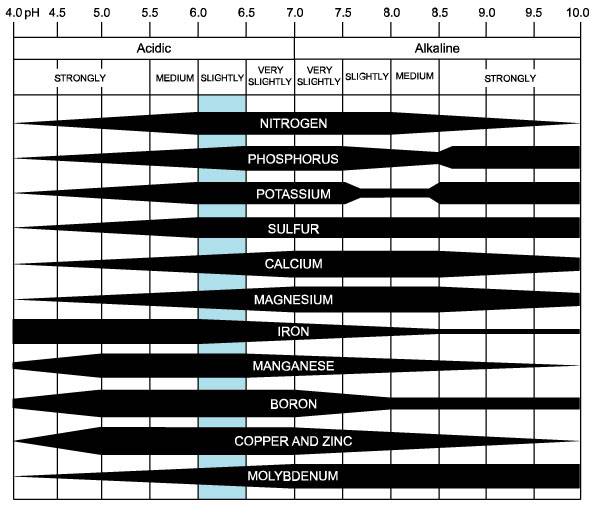
Antagonism — When One Nutrient Blocks Another
Antagonism occurs when high levels of one nutrient reduce the availability or absorption of another. Too much of a good thing can quickly become a limitation in disguise.
Some common examples include:
Excess nitrogen can reduce uptake of boron, potassium (potash), and copper
High phosphate levels can interfere with iron, calcium, potassium, copper and zinc uptake
High potassium (potash) often leads to magnesium deficiency
Even with a well-amended soil, plants can show deficiency symptoms if nutrient balance is skewed. A field high in nitrogen and potassium, for example, can test sufficient in magnesium — but the plant may still struggle to take it up.
Over-application of N, P, and K can unintentionally cause deficiencies in secondary and micronutrients if balance isn’t considered. This is why many fertilization problems aren’t about lack, but competition.
Stimulation — When One Nutrient Increases Demand for Another
While antagonism suppresses nutrient uptake, stimulation works differently. Instead of blocking, it increases metabolic demand.
A plant performing at a higher level needs more support to keep metabolism running smoothly. For example:
High nitrogen levels stimulate plant growth, which in turn increases the need for magnesium
So even if magnesium levels haven’t changed in the soil, a plant under nitrogen-driven growth may quickly run short.
This is why balanced feeding is more effective than simply providing more — growth needs fuel from multiple directions.
Putting It All Together with Mulder’s Chart
Below is the chart that ties these concepts into a clear visual reference. Strong lines indicate stimulating relationships; blunt lines indicate antagonistic ones. Use it to guide fertilization decisions, troubleshoot deficiencies, and plan nutrient applications with synergy instead of conflict.
Putting It All Together with Mulder’s Chart
When reviewing your soil test or planning your next feeding cycle, consider these questions:
✓ Am I supplying nutrients in a way that keeps ratios balanced?
✓ If a deficiency appears, is it possible something else is blocking uptake?
✓ When boosting growth with nitrogen — am I also supporting magnesium?
✓ Could increasing one nutrient require increasing another?
Thinking in terms of relationships, not just individual numbers, leads to better yield, healthier crops, and fewer surprises during the growing season.